Best Race Belts and Elastic Laces for Fast Triathlon Transitions in 2026
Race belts and elastic laces are the cheapest speed you can buy. Our ranked picks for gel loops, lace tension, and sockless running in T1 and T2.
FullKitTri is reader-supported. We may earn a commission from qualifying purchases made through links on this page.
There is no gear in triathlon with a better return on money than a race belt and a set of elastic laces. Together they cost less than a single dinner out, and they reliably save 20-40 seconds across T1 and T2 — plus they remove two of the most common rookie fumbles: fighting with safety pins on a wet tri suit, and trying to tie a bow with numb, sandy fingers.
The good news is that this is a solved problem. A race belt is a strip of elastic webbing with a plastic buckle and some toggles. Elastic laces are a stretchy cord with a lock. The engineering ceiling is low, which means the gap between a $7 no-name belt and a $20 brand-name one is mostly buckle quality, webbing width, and how well the gel loops hold under a hard run. Nobody should agonize over this purchase.
What does matter: gel loops that actually retain a gel when you're running fast, a buckle that doesn't pop when you cinch it over a wetsuit-damp suit, and laces you can set to a tension that works for sockless running, where your foot swells and rubs differently than it does in training. Get those three things right and you can stop thinking about it for several seasons. If you're still mapping out your whole transition, start with our T1 and T2 transition tips and the transition bag packing guide.
How we picked
- Buckle and toggle security first. A belt that spins is annoying; a belt that unclips at mile 4 is a DNF risk if your bib comes off. We favored designs with a proper side-release or robust clip buckle.
- Gel loops that are actually usable. Six loops is the sweet spot for 70.3 distance. We looked for elastic loops sewn into the webbing rather than flimsy add-ons.
- Lace hardware that holds tension. Spring-loaded locks are the standard for a reason. We also included a lock-free option for people who hate pressure points on the instep.
- Established brands where it's cheap to have them. At these prices there's little reason to buy a mystery listing, so we leaned on tri and run brands — with one deliberate budget pick to show where the generic stuff is genuinely fine.
- Research, spec comparison, and race-day experience — not lab testing. These are simple products; reliability reports from age-groupers and multi-season durability chatter carry more weight than any bench test would.
Quick picks
| Product | Best for | Price | |
|---|---|---|---|
| Lock Laces — Best elastic laces overall | Any triathlete who wants one set of laces that just works, in every shoe they own. | $9.99 | View |
| Zone3 Ultimate Race Number Belt with Gel Loops — Best race belt overall | Sprint-to-70.3 racers who want a proper tri-brand belt with gel storage and no fuss. | $10.00 | View |
| Nathan Race Number Nutrition Waistbelt — Best for long-course fueling | Ironman and 70.3 athletes who want to carry real nutrition, not just bib-attachment hardware. | $20.00 | View |
| Caterpy RUN Elastic Shoe Laces — Best lock-free laces for sensitive insteps | Runners who get hot spots or numbness from the plastic lock on standard elastic laces. | $14.95 | View |
| RJ-Sport Race Number Belt — Best budget belt with gel loops | First-timers and anyone who needs a spare belt for the race-week drawer. | $8.99 | View |
The picks, in detail
 #1
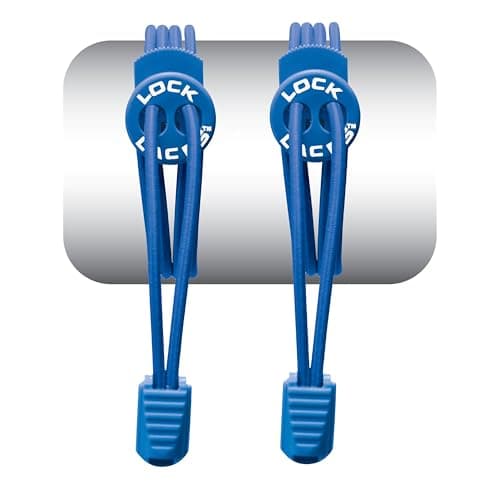
#1Lock Laces — Best elastic laces overall
Best for: Any triathlete who wants one set of laces that just works, in every shoe they own.
- Spring-loaded lock lets you dial exact tension and re-dial it mid-race if your foot swells
- One-size cord fits everything from low-profile racers to chunkier trainers
- Cord clip keeps the trimmed tails from flapping against your ankle
- The de facto standard in transition — easy to replace anywhere, including race expos
- The lock sits on top of the instep and can become a hot spot on long runs if you cinch it too tight
- You have to trim the cord to length, and if you cut too short you've wasted a set
- Single-pair pricing is higher per pair than bulk multi-packs of generic cord
Lock Laces are the default for a reason: the toggle holds tension reliably, the cord doesn't creep loose over a marathon, and installation takes about three minutes per shoe. The key trick for sockless racing is to set them slightly looser than your normal training tension and then tug the lock down snug at the end of T2 — your feet will swell, and a lace tension that felt perfect on a cool morning run will feel like a tourniquet at mile 8. Skip them only if you're sensitive to pressure on the top of the foot, in which case go to pick #4.
 #2
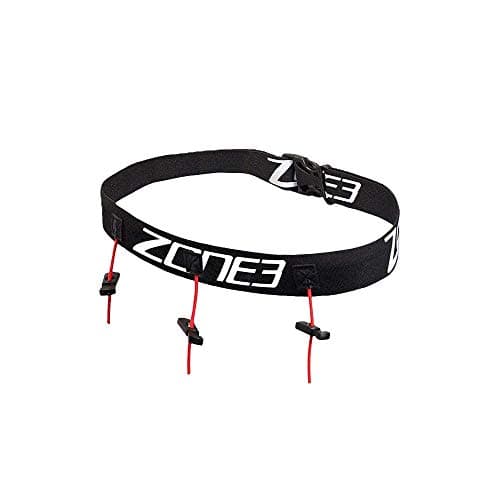
#2Zone3 Ultimate Race Number Belt with Gel Loops — Best race belt overall
Best for: Sprint-to-70.3 racers who want a proper tri-brand belt with gel storage and no fuss.
- Six integrated gel loops handle 70.3-distance fueling without a pouch
- Tri-specific design: narrow enough to sit under a race number without bunching the suit
- Clip buckle and toggles are noticeably more secure than bargain-bin hardware
- Compact and light enough that you forget it's there on the bike
- Costs a few dollars more than functionally similar generics
- Loops can rub bare skin at the hip if you race shirtless or in a two-piece with a gap
- Only sold in the one loud colorway on most listings
Zone3 is a triathlon brand, and it shows in the details: the webbing width and toggle placement are set up so the belt sits flat under a bib without twisting when you clip it on wet. Six gel loops is the right number — enough for a half-distance run split, not so many that empty loops flap. If you only buy one belt and want it to last several seasons of salt water and sweat, this is the one.
 #3
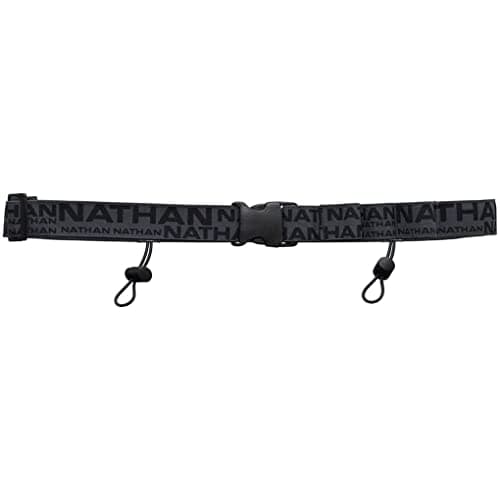
#3Nathan Race Number Nutrition Waistbelt — Best for long-course fueling
Best for: Ironman and 70.3 athletes who want to carry real nutrition, not just bib-attachment hardware.
- Built for carrying fuel as well as the bib, so you're not choosing between the two
- Wider, more padded waist band spreads load better than thin webbing when loaded up
- Nathan's run-brand hardware and stitching are a step above generic belts
- Works just as well for standalone marathons and long training runs
- Bulkier and heavier than a plain elastic strip — overkill for a sprint
- Most expensive belt here by a clear margin
- A loaded belt can bounce or ride up; you'll want to test it on a long run first
- Wider band means more skin contact and more chafe risk in a two-piece kit
If your full-distance plan involves carrying your own gels, salt, and a flask rather than living off course aid stations, a plain bib belt runs out of capacity fast. This is the belt for that athlete: more carrying capacity, more comfort under load, and a band that doesn't cut in when it's full. Sprint and Olympic racers should not buy this — a minimal belt is faster and cooler. Pair it with a fueling plan from our triathlon nutrition guide.
 #4
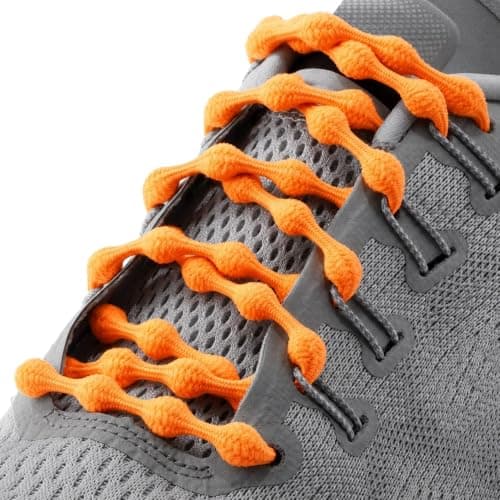
#4Caterpy RUN Elastic Shoe Laces — Best lock-free laces for sensitive insteps
Best for: Runners who get hot spots or numbness from the plastic lock on standard elastic laces.
- No lock hardware at all — nothing sits on top of your foot
- Textured bumps grip inside the eyelets, so tension holds where you set it
- Genuinely clean look, and nothing to snag or unclip in transition
- Available in bright colors that are easy to find in a chaotic transition area
- Tension is set when you install them; adjusting mid-race means re-threading, not a quick tug
- Fiddlier to install than a lock-and-cord system — budget 10 minutes for the first pair
- Pricier than most elastic laces despite having no hardware
- Less forgiving if your feet swell a lot on hot-weather long courses
These solve the one real complaint about lock-style laces: that plastic toggle pressing into the top of your foot for 13.1 miles. The trade-off is adjustability — you set the tension at the kitchen table and live with it, so do a couple of sockless brick runs before race week to confirm it's right. For flat-footed sprint and Olympic racing where swelling is minimal, they're excellent; for hot Ironman marathons where you may want to loosen at mile 15, the lock system wins.
 #5
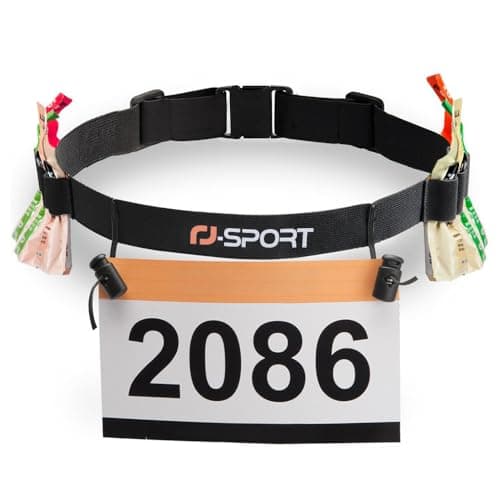
#5RJ-Sport Race Number Belt — Best budget belt with gel loops
Best for: First-timers and anyone who needs a spare belt for the race-week drawer.
- Six gel loops at a price that makes buying two or three painless
- Standard elastic webbing plus clip buckle — the same basic design as belts costing double
- Fully adjustable, so it works over a tri suit or a wetsuit-damp kit
- Cheap enough to leave permanently packed in your race bag
- Elastic will slacken after a few seasons of salt and sweat — treat it as consumable
- Buckle and toggle plastic feels less substantial than the Zone3 or Nathan hardware
- Generic listings come and go, so the exact model may change between orders
This is the honest budget answer: a race belt is elastic webbing and a clip, and the cheap ones work. The realistic downside is lifespan — the elastic loses snap sooner than a tri-brand belt, and you'll notice the belt creeping down your hips in year three. At this price that's fine; buy a second one, keep it in your transition bag, and replace both when they go soft.
What to look for
- Gel loops, not pockets, for most racing. Loops are faster to access at speed and don't bounce. If you're carrying more than four gels or need salt tabs and a flask, step up to a nutrition belt instead.
- Buckle security over everything. Test the clip with wet hands before race day. A belt that pops open mid-run is worse than pinning your number.
- Belt on before the shoes, spun to the back on the bike. Wear the bib on your back for the ride (if your race allows) and spin it to the front in T2. It takes half a second and stops wind flap.
- Lace tension for sockless running. Set elastic laces slightly looser than your training tension, then snug them once at the end of T2. Feet swell in heat and after four-plus hours; the lace tension that felt right at 6 a.m. will not feel right at noon.
- Match laces to shoe eyelet count. Very low-profile racing shoes with few eyelets hold elastic cord differently than trainers. If you race in super shoes, check our running shoes for triathletes guide and install the laces well before race week.
- Buy cheap, buy spares. Belts and laces are consumables. Elastic fatigues, locks crack, toggles wear. Two belts and two sets of laces still costs less than one pair of goggles.
Common questions
Do I actually need a race belt, or can I just pin the number?
You need one if you're doing more than one race. Pins on a wet tri suit tear the fabric, snag skin, and cost you a minute of fumbling in T2. A belt also lets you flip the number from back (bike) to front (run) instantly. It's the single cheapest transition upgrade available.
Are elastic laces legal in triathlon?
Yes. Elastic laces are standard equipment across USAT, Ironman, and Challenge races. What is not allowed at most races is external headphone use or unassisted gear handoffs — laces are a non-issue.
Will elastic laces make my shoes come off?
Not if they're set right. The failure mode is the opposite: people set them too tight, get numb toes and hot spots, and blame the laces. Install them, run 30 minutes sockless, adjust, then repeat. Do this at least two weeks out, never on race morning.
Should I run sockless at all?
If your race is a sprint or Olympic, sockless saves real time and is worth practising. For 70.3 and full distance, most age-groupers are better off taking the 10-15 seconds to pull socks on — blisters at mile 3 of a marathon cost far more than 15 seconds. Practice both in bricks and decide based on your own feet.
Bottom line
For most triathletes: Lock Laces plus the Zone3 Ultimate Race Number Belt is the complete answer, and you're done for several seasons. If you're fueling yourself through a full-distance marathon, the Nathan Race Number Nutrition Waistbelt carries what a bib belt can't. If the plastic lock on your instep bothers you, swap to Caterpy RUN. And if you're doing your first sprint or just need a spare in the bag, the RJ-Sport belt is genuinely fine — this is one category where buying the cheap version isn't a compromise.
Also worth a look if you can find them: Yankz Sure Lace (a lock system with a flatter, lower-profile toggle), Greeper laces (excellent for one-handed adjustment), and FuelBelt or SPIbelt race belts, none of which made this pool. New to all of this? Start with the beginner triathlon gear checklist and work down from there.
Written by
FullKitTri Editors
The FullKitTri editorial team reviews triathlon gear across every discipline and budget. Our recommendations are based on hands-on racing experience, independent research, and hundreds of hours comparing products.
- Combined 50+ triathlons completed
- Sprint through Ironman distance experience
More in Training & Race Day
Best Triathlon Transition Bags and Backpacks in 2026
Six triathlon transition bags and backpacks compared on wet/dry separation, helmet protection, capacity for sprint to Ironman, and carry-on travel.
Read guideTriathlon Transition Tips: How to Nail T1 and T2
Step-by-step T1 and T2 technique for triathlon — flying mounts, sockless running, helmet rules, and the drills that shave 60+ seconds without any fitness gain.
Read guideBeginner Triathlon Gear Checklist: Everything You Need for Your First Race
A complete triathlon gear checklist for first-time racers — what you actually need for the swim, bike, and run, what you can skip, and what to spend money on.
Read guideHow to Pack a Triathlon Transition Bag: Race-Day Strategy
How to pack your triathlon transition bag for fast T1 and T2, what to lay out in transition, and the checklist pros use to avoid forgetting critical gear.
Read guide#1 pick
Lock Laces — Best elastic laces overall