Best Indoor Bike Trainers for Triathletes in 2026
Direct-drive vs wheel-on, power accuracy, noise, and Zwift compatibility - six indoor bike trainers ranked for triathletes who train in aero.
FullKitTri is reader-supported. We may earn a commission from qualifying purchases made through links on this page.
Triathletes ride indoors more than any other category of cyclist, and it isn't because we love staring at a wall. It's because the trainer solves three problems at once: it lets you hold an aero position for 90 straight minutes without traffic lights, corners, or coasting; it turns a 60-minute window into a real 60-minute workout; and it gives you repeatable power numbers so your interval sessions actually build on each other.
That changes what matters in a trainer. A road cyclist can live with a wheel-on unit that drifts a few percent. If you're pacing a 70.3 at a specific fraction of FTP, you want the number on the screen indoors to mean roughly the same thing as the number on your head unit outdoors. And if you're doing two or three trainer sessions a week in a spare bedroom at 5 a.m., noise is a real constraint, not a nice-to-have.
The basic fork in the road is direct-drive versus wheel-on. Direct drive removes the rear wheel and mounts your bike on a cassette attached to the flywheel: quieter, more accurate, more resistance, no tire wear, but more money and a bit more setup fuss (cassette, thru-axle adapters). Wheel-on leaves the rear wheel in and presses a roller against the tire: cheap, fast to set up, louder, and looser on power. Both work with Zwift, TrainerRoad, Rouvy, MyWhoosh, and the rest — the difference is how good the data and the experience are.
One triathlon-specific warning before you buy: check your rear axle. A lot of modern tri bikes are 12mm thru-axle disc setups, and most trainers ship with quick-release hardware plus some adapters. Confirm your axle standard and your cassette speed before you click buy, or your new trainer becomes a very expensive paperweight for a week.
How we picked
- Power accuracy first. Claimed accuracy of ±1-2% is the bar for anyone doing structured FTP-based training; looser than that is fine for general fitness, not for race pacing.
- App compatibility that won't fight you. ANT+ FE-C and Bluetooth FTMS at minimum so Zwift, TrainerRoad, and your Garmin all talk to it. Built-in WiFi is a genuine quality-of-life upgrade for dropout-free ERG sessions.
- Noise in a real house. Belt-driven direct-drive units are quiet enough for an apartment; wheel-on units are not, and we say so.
- Resistance and ride feel for long aero efforts. Enough flywheel and gradient range that steady sweet-spot work doesn't feel like pedaling through gravel.
- Brand track record and support. Trainers are electronics that live under a sweating athlete. We leaned toward Wahoo, Garmin/Tacx, Elite, and Saris over no-name listings, and we ignored accessories entirely.
Quick picks
| Product | Best for | Price | |
|---|---|---|---|
| Wahoo KICKR CORE 2 — Best overall for most triathletes | The age-grouper who wants near-flagship accuracy and app reliability without paying flagship money. | $548.19 | View |
| Wahoo KICKR V6 — Best premium direct-drive for heavy indoor blocks | Triathletes who live on the trainer through winter and want the most refined Wahoo experience. | $849.99 | View |
| Garmin Tacx Neo 2T Smart Trainer — Quietest, best road feel | Anyone training at 5 a.m. in a thin-walled apartment or sharing a house with sleeping family. | $899.99 | View |
| Elite Avanti Zwift Ready Smart Trainer — Best accuracy per dollar | Data-driven triathletes who want ±1% power and virtual shifting without Wahoo flagship pricing. | $769.99 | View |
| Elite Rivo Zwift Ready Smart Trainer — Cheapest direct-drive worth buying | First-time trainer buyers who want to skip wheel-on entirely but can't stretch to a flagship. | $569.99 | View |
| Elite Tuo Interactive Wheel-On Trainer — Best budget wheel-on | Beginners, off-season dabblers, and anyone who needs a Zwift-capable setup for the least money possible. | $149.99 | View |
The picks, in detail
 #1
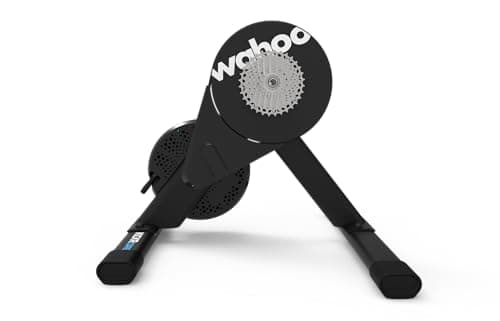
#1Wahoo KICKR CORE 2 — Best overall for most triathletes
Best for: The age-grouper who wants near-flagship accuracy and app reliability without paying flagship money.
- Wahoo's stated ±1% power accuracy puts it in the same conversation as trainers costing far more
- Ships with an 11-speed cassette pre-installed, so most tri and road bikes bolt straight on
- WiFi plus Bluetooth and ANT+ FE-C means rock-solid ERG sessions in TrainerRoad and Zwift
- Belt-driven and quiet enough for shared living spaces once you're spinning smoothly
- Wahoo's firmware and app support is the most mature in the category
- Fixed frame with no side-to-side movement, which you'll notice on long aero holds
- Needs thru-axle adapters for many disc-brake tri bikes (sold separately)
- 12-speed drivetrains require buying and fitting your own cassette
- Stock is inconsistent and it often sells at or near flagship pricing during shortages
The CORE line has been the default answer for structured-training triathletes for years, and the second-generation version closes most of the gap to the full KICKR by adding WiFi and tightening the accuracy claim. For the way triathletes actually train — long ERG blocks, repeated threshold intervals, minimal sprinting — this does everything the halo models do. Skip it only if you specifically want the motion, the descent simulation, or the extra gradient range of the pricier units.
 #2
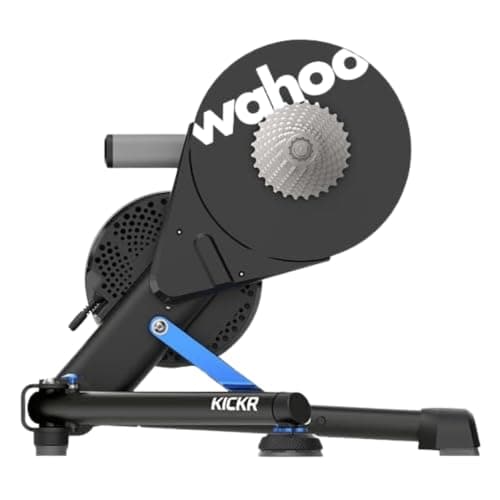
#2Wahoo KICKR V6 — Best premium direct-drive for heavy indoor blocks
Best for: Triathletes who live on the trainer through winter and want the most refined Wahoo experience.
- ±1% claimed accuracy with a big flywheel that makes steady-state efforts feel natural
- Built-in WiFi with Wahoo's direct-connect and Race Mode for faster, more stable data
- Higher gradient simulation and max power ceiling than the CORE for climbing and sprints
- Small amount of built-in frame flex takes the edge off long aero sessions
- Deep accessory ecosystem if you later add a climb simulator or motion plate
- Meaningfully more expensive than the CORE for gains most age-groupers won't feel
- Heavy and awkward to move; this is a permanent installation
- Still needs a cassette and possibly axle adapters depending on your bike
- Overkill if your indoor riding is two 60-minute sessions a week
If your training plan has you indoors four or five times a week from November to March, the V6 is the trainer that earns its money through sheer refinement: faster connection, better road feel, fewer gremlins. It is not a fundamentally more accurate tool than the CORE, though, so buy it for the experience rather than the data. Triathletes in apartments will also appreciate that it's very quiet — your drivetrain will be the loudest thing in the room.
 #3
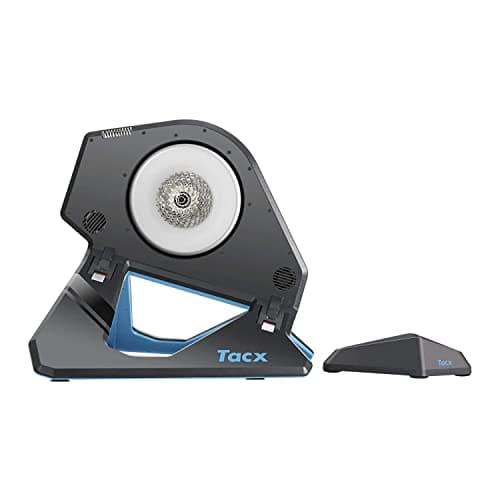
#3Garmin Tacx Neo 2T Smart Trainer — Quietest, best road feel
Best for: Anyone training at 5 a.m. in a thin-walled apartment or sharing a house with sleeping family.
- Direct-drive motor design with no physical flywheel contact makes it the quietest option here
- No calibration ever required, which removes a whole category of user error
- Wide gradient simulation range and high power ceiling
- Can run without being plugged in for basic resistance, a genuinely useful travel/backup feature
- Simulates road surfaces and descent drive when powered, which helps long sessions pass
- Very heavy and expensive for an older-generation product
- No built-in WiFi, so you're relying on ANT+/Bluetooth from your device
- Garmin's indoor software ecosystem is less polished than Wahoo's
- The road-surface vibration feature is a novelty most riders turn off after a month
The 2T has been around a while, but nothing has really beaten it on noise, and for triathletes doing dawn sessions that's often the deciding factor. The no-calibration design also means your power numbers are consistent week to week without you thinking about it, which matters when you're setting race pace off indoor FTP tests. Pass if you want the newest connectivity features — this is a mature product, priced like a flagship.
 #4
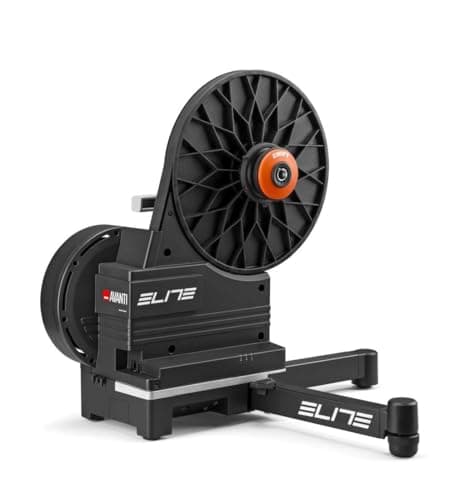
#4Elite Avanti Zwift Ready Smart Trainer — Best accuracy per dollar
Best for: Data-driven triathletes who want ±1% power and virtual shifting without Wahoo flagship pricing.
- Elite claims ±1% power accuracy, matching trainers well above its price
- Includes the Zwift Cog and Click, so setup works across almost any 8-12 speed bike without buying a cassette
- WiFi plus Bluetooth and ANT+ connectivity with auto-calibration
- Climb simulation and max power figures are plenty for triathlon-style training
- Virtual shifting is genuinely handy on a tri bike where reaching the shifters means leaving aero
- Elite's firmware and app support has historically been less consistent than Wahoo's
- US service and spare-parts availability is thinner than the big two
- Virtual shifting only works fully inside supported apps like Zwift
- Newer model with a shorter real-world reliability track record
Elite has quietly become the value play in direct drive, and the Avanti undercuts comparable Wahoo and Garmin units while claiming the same accuracy spec. The Zwift Cog setup is especially good for triathletes: you drop the bike on, leave it in one gear, and change resistance with a bar-mounted button instead of shifting out of aero. The trade-off is ecosystem maturity — if firmware updates and customer service horror stories give you hives, pay the Wahoo tax instead.
 #5
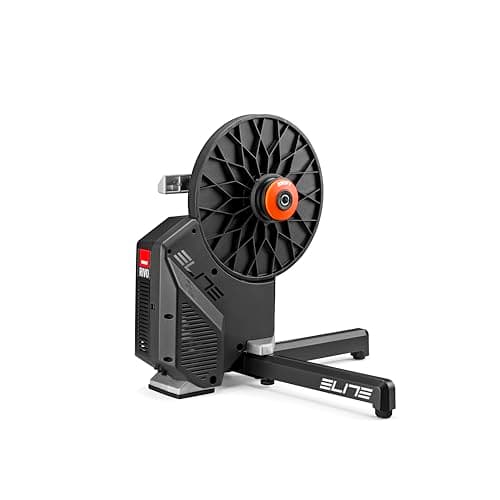
#5Elite Rivo Zwift Ready Smart Trainer — Cheapest direct-drive worth buying
Best for: First-time trainer buyers who want to skip wheel-on entirely but can't stretch to a flagship.
- Direct-drive quietness and zero tire wear at close to wheel-on money
- Cog and Click included, so no cassette purchase and no shifting out of aero
- WiFi and Bluetooth connectivity for stable Zwift and TrainerRoad sessions
- Compact folding frame is easy to shove into a closet between sessions
- ±2.5% claimed accuracy is a real step down from the ±1% units for FTP-based pacing
- Smaller flywheel and lower resistance ceiling means less convincing ride feel on hard efforts
- Very new product with limited long-term reliability data
- Elite's support network is thinner than Wahoo's if something goes wrong
The Rivo exists to kill the mid-range wheel-on category, and it mostly succeeds: for not much more than a decent wheel-on smart trainer you get silence, no tire wear, and no slippage. The looser accuracy spec is the honest catch — it's fine for building fitness and following a plan, but if you're setting Ironman pacing zones to the watt, step up to the Avanti or CORE. The folding frame is a real plus for anyone training in a small apartment.
 #6
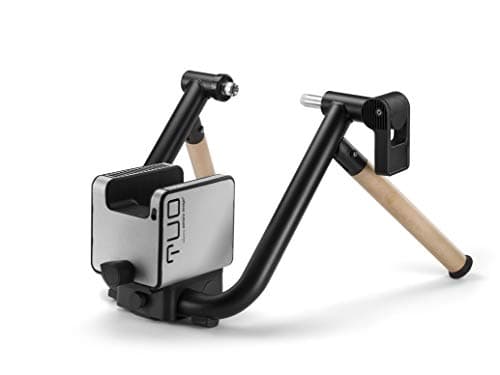
#6Elite Tuo Interactive Wheel-On Trainer — Best budget wheel-on
Best for: Beginners, off-season dabblers, and anyone who needs a Zwift-capable setup for the least money possible.
- Full interactive smart trainer — automatic resistance control in Zwift, TrainerRoad, and Rouvy
- ANT+ FE-C and Bluetooth, so it works with every major app and head unit
- Setup takes under a minute; leave the rear wheel in, clamp, ride
- Compact footprint and far lighter than any direct-drive option
- Costs a fraction of the direct-drive picks here
- Wheel-on power accuracy is loose compared with direct drive; treat FTP tests as approximate
- Noticeably louder — tire hum will carry through an apartment wall
- Chews through rear tires unless you fit a dedicated trainer tire
- Limited gradient simulation and tire slip on hard out-of-saddle efforts
If your indoor riding is a winter supplement rather than the core of your training, a good wheel-on smart trainer is still the sensible buy, and the Tuo is the cheapest one here that does real app-controlled resistance rather than fake it. Budget for a trainer tire and accept that the wattage is ballpark, not gospel. Anyone doing more than a couple of structured sessions a week should save up for direct drive instead — the accuracy and noise difference is bigger than the price gap suggests.
What to look for
- Power accuracy spec. ±1-2% is the line for structured training. Anything looser is fine for fitness but will make indoor and outdoor zones disagree, which is maddening when you're pacing a 70.3 off FTP.
- Direct drive vs wheel-on. Direct drive is quieter, more accurate, doesn't slip, and doesn't eat tires. Wheel-on is cheaper and faster to set up. There's no third option that splits the difference well.
- Connectivity. ANT+ FE-C plus Bluetooth FTMS covers every app. WiFi is the upgrade worth paying for — it eliminates the mid-interval ERG dropouts that ruin a session.
- Axle and cassette compatibility. Confirm whether you need thru-axle adapters and whether the trainer ships with a cassette that matches your drivetrain. Trainers with a Zwift-style single cog sidestep this entirely.
- Noise, honestly assessed. Modern direct-drive trainers are quieter than your chain. Wheel-on units are not. If you train early or share walls, this decides the purchase.
- Stability for aero work. Triathletes spend long stretches on the extensions. A wide, rigid base (or a unit with built-in movement) makes that far more tolerable than a wobbly wheel-on frame.
Common questions
Do I need a trainer that matches my power meter?
No, but you should know which one you're training to. If your bike has a power meter and head unit, pick one device as your reference and use it consistently. Trainer and crank power will differ by a few watts because of drivetrain losses — that's normal, not a defect.
Can I use my tri bike on a trainer, or should I use my road bike?
Use the tri bike. The whole point of indoor time for a triathlete is accumulating hours in your race position, and the trainer is the safest place to do that. If your position isn't dialed yet, that's a fit problem to solve first — see how to choose a triathlon bike.
Is Zwift or TrainerRoad better for triathletes?
Different tools. TrainerRoad is a plan engine — it tells you what to do and makes you do it in ERG mode. Zwift is entertainment with structure bolted on, which keeps long endurance rides bearable. Plenty of age-groupers run TrainerRoad workouts while a Zwift world plays on a second screen. Every trainer here works with both.
Does a smart trainer replace a power meter?
For indoor training, yes. For race-day pacing outdoors, no — you still need power on the bike. If you're building a kit from scratch, the trainer usually comes first because it turns every 45-minute window into usable training.
Bottom line
Most triathletes should buy the Wahoo KICKR CORE 2 and stop researching: accurate, quiet, well supported, and cassette-ready out of the box. If you're going to spend half the year indoors and want the most refined version of that, step up to the KICKR V6. If noise is the constraint — early mornings, thin walls, sleeping kids — the Garmin Tacx Neo 2T is still the quietest thing you can buy.
Want flagship accuracy for less and don't mind a slightly less polished software ecosystem? The Elite Avanti is the value standout. On a tighter budget, the Elite Rivo gets you into direct drive for close to wheel-on money, and the Elite Tuo is the honest cheap answer if indoor riding is only ever going to be an off-season habit.
Also worth a look if you can find them outside this pool: the Zwift Ride smart frame (great if you'd rather not tie up your tri bike), the Saris H3 for a rock-solid older flagship, and Wahoo's KICKR Bike Pro if you genuinely want a dedicated indoor machine with adjustable geometry. And while you're building out the pain cave, a fan matters more than almost any upgrade here — heat, not legs, is what ends most indoor sessions. New to the sport? Start with the beginner triathlon gear checklist before you spend four figures on a trainer.
Written by
FullKitTri Editors
The FullKitTri editorial team reviews triathlon gear across every discipline and budget. Our recommendations are based on hands-on racing experience, independent research, and hundreds of hours comparing products.
- Combined 50+ triathlons completed
- Sprint through Ironman distance experience
More in Triathlon Bikes
Best Clip-On Aero Bars for Turning a Road Bike Into a Triathlon Bike
Clip-on aero bars that actually fit a road bike: Redshift, Profile Design, Zipp and Controltech compared on shape, adjustability and fit-friendliness.
Read guideHow to Choose a Triathlon Bike: Road vs. Tri vs. TT Explained
Road bike vs. triathlon bike vs. TT bike — geometry, aero, comfort, and budget compared. How to pick the right bike for your first sprint, your first 70.3, or your Ironman build.
Read guideBest Aero Helmets for Triathlon in 2026
The aero helmets worth the watts: short-tail vs. long-tail, ventilation trade-offs, and which models actually save time at age-group speeds.
Read guideBest Bike Computers for Triathlon in 2026
The best GPS bike computers for triathlon training and racing — from budget to premium, compared on battery life, navigation, power-meter support, and readability.
Read guide#1 pick
Wahoo KICKR CORE 2 — Best overall for most triathletes