Best Clip-On Aero Bars for Turning a Road Bike Into a Triathlon Bike
Clip-on aero bars that actually fit a road bike: Redshift, Profile Design, Zipp and Controltech compared on shape, adjustability and fit-friendliness.
FullKitTri is reader-supported. We may earn a commission from qualifying purchases made through links on this page.
A set of clip-on aero bars is the single biggest speed-per-dollar upgrade available to a triathlete on a road bike. Not a wheelset, not a skinsuit, not a fancy chain wax. Getting your forearms in front of your chest and your torso down out of the wind is worth more free watts than everything else you can bolt on for a similar outlay — and you keep the bike you already own.
The catch is that clip-ons are a fit problem disguised as a parts purchase. A road bike's geometry puts your saddle behind the bottom bracket, which is great for climbing out of the saddle and terrible for holding an aggressive aero position for 40k or 90k. Bolt on extensions, drop your torso, and your hip angle closes, your hamstrings go tight, your saddle pressure moves forward, and your run off the bike gets ugly. The bars are cheap; the fit session that makes them usable is the part most people skip and then regret.
So treat this as a two-part purchase: bars plus a fit (or at minimum, a slow, methodical DIY setup with video from the side and a lot of short test rides). Also budget for a saddle change and possibly a shorter stem or a setback-reducing seatpost. If you're already contemplating all of that, read how to choose a triathlon bike first — for some people the honest answer is to save up for a tri bike under $3,000 instead of frankensteining a road frame.
Amazon's aero bar category is a swamp of no-name carbon with vague titles and no published stack/reach numbers. The picks below stick to brands whose hardware is documented, whose clamps are known quantities, and whose spare pads and bolts you can actually buy in two years.
How we picked
- Adjustability that matters — independent armrest stack, reach, and width, plus extension tilt. Bars that only bolt on one way only fit one rider.
- Extension shape options — S-bend, J-bend, L-bend and ski-tip all change your wrist angle and hand height; we favored brands offering a shape choice rather than one take-it-or-leave-it curve.
- Road-bike friendliness — flip-up or quick-release armrests, sane clamp widths for 31.8mm round bars, and clearance for cables and computer mounts.
- Brand support and parts — replaceable pads, published torque specs, and available hardware from Profile Design, Zipp, Redshift and Controltech beat anonymous carbon at half the price.
- Weight and stiffness relative to price — we ignored grams when the cheaper aluminum option was the more adjustable, more repairable choice, which is most of the time.
We have not lab-tested these. This is spec comparison, geometry math, and a lot of years reading fitter and age-grouper feedback on what survives a season.
Quick picks
| Product | Best for | Price | |
|---|---|---|---|
| REDSHIFT Quick-Release Clip-On Aerobars S-Bend — Best overall for a dual-purpose road bike | The rider with one bike who wants aero bars for tri and long solo rides, and wants them gone in seconds for group rides and club races. | $219.99 | View |
| Profile Design Airstryke V2 — Best flip-up armrests for group riding | Riders who ride in groups often and want the armrests out of the way instantly without unbolting anything. | $147.77 | View |
| Zipp Vuka Clip with Evo 70 Extensions — Best for dialing in a precise position | Riders working with a fitter who want a modular clamp system and the ability to swap extension shapes later. | $139.99 | View |
| Profile Design Legacy II — Best budget clip-on from a real brand | First-time aero bar buyers testing whether they can hold the position before committing to anything expensive. | $100.83 | View |
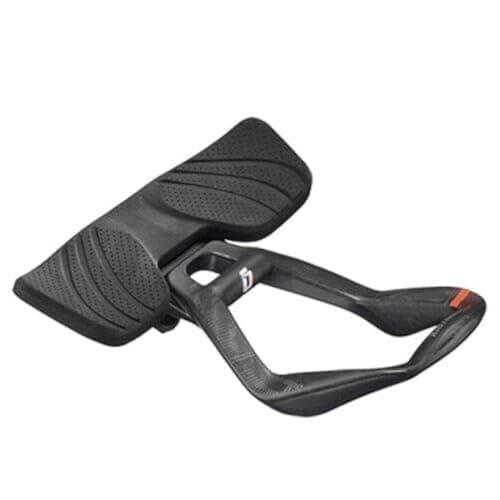
| Controltech Sirocco Mini — Best short, light carbon clip-on | Road racers and short-course triathletes who want a minimal, low-profile bar for solo efforts and sprint-distance racing. | $245.00 | View |
The picks, in detail
 #1
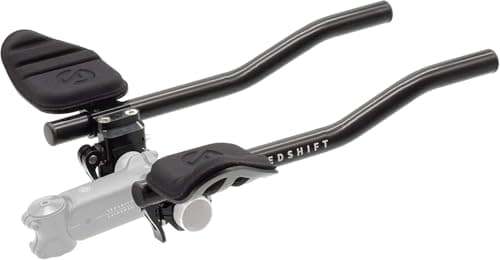
#1REDSHIFT Quick-Release Clip-On Aerobars S-Bend — Best overall for a dual-purpose road bike
Best for: The rider with one bike who wants aero bars for tri and long solo rides, and wants them gone in seconds for group rides and club races.
- Tool-free quick-release lets you remove and refit the whole assembly in under a minute without losing your position
- S-bend extensions put your hands high and relaxed, which is the easier shape for riders new to the aero position
- Independent armrest width, fore/aft and stack adjustment, plus extension tilt
- Aluminum construction means you can clamp, adjust and re-torque without the cracking risk of cheap carbon
- Same mount also available with L-bend extensions if you prefer a flatter wrist
- Meaningfully more expensive than basic clip-ons, and the quick-release hardware adds weight
- Heavier than a carbon mini bar — this is not the choice if you're chasing grams
- Quick-release mechanism adds bulk at the clamp; check clearance if you run a between-the-arms bottle or a crowded cockpit
Redshift built these specifically around the road-bike-that-races-tri use case, and the quick-release is the reason to pay up: if you know you can pull the bars before Saturday's group ride, you'll actually leave them on the bike the rest of the week and get used to the position. That repetition is what makes you fast, not the bar itself. Skip them if your bike never sees a paceline and you'd rather put the difference toward a fit session.
 #2
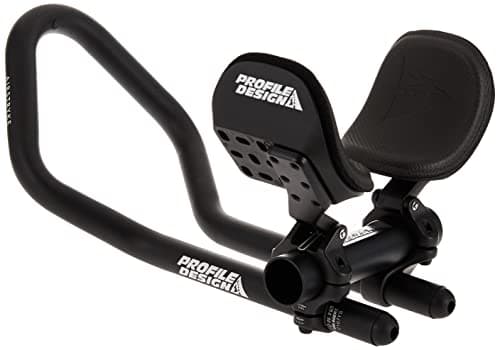
#2Profile Design Airstryke V2 — Best flip-up armrests for group riding
Best for: Riders who ride in groups often and want the armrests out of the way instantly without unbolting anything.
- Spring-loaded armrests retract rearward so you can use the hoods and drops normally with the bars fitted
- Adjustable stack and reach, so you can dial armrest height with spacers instead of guessing
- Aluminum extensions and Profile Design hardware, with pads and small parts easy to source
- Established design that's been in the range for years — plenty of setup information available
- Retracting mechanism is one more thing to keep clean, and it can rattle as it ages
- Heavier and bulkier than a fixed clip-on of the same price
- Armrest fore/aft range is tied to the retracting design, so extreme positions are harder to achieve
- Still not a true quick-release — the clamp stays on the bar
The Airstryke's party trick is that the armrests swing back out of the way, so the bars stop being a hazard when you're sitting in a group or reaching for the hoods on a technical descent. That makes it the most practical option for a rider whose bike does club rides Monday through Saturday and a sprint tri on Sunday. Fixed-armrest bars are lighter and simpler, so if you ride solo, buy something else.
 #3
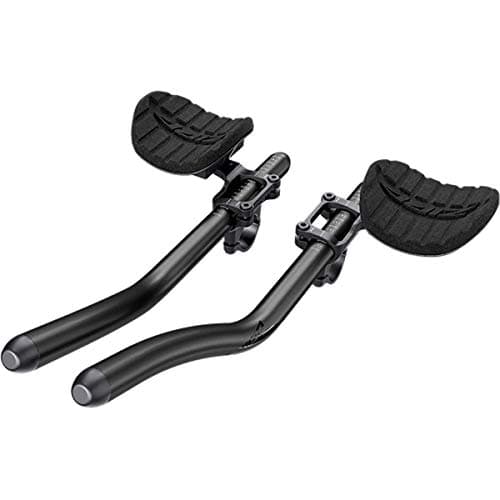
#3Zipp Vuka Clip with Evo 70 Extensions — Best for dialing in a precise position
Best for: Riders working with a fitter who want a modular clamp system and the ability to swap extension shapes later.
- Above-bar mount raises armrest stack, which suits road-bike geometry better than a low mount for most riders
- Part of the wider Vuka ecosystem, so extensions and armrest wedges can be swapped as your position evolves
- Aluminum clamp and extensions — durable, adjustable, and forgiving of repeated fit changes
- Clean, uncluttered shape that plays well with a computer mount between the extensions
- You pay for the system, not a huge feature list — a basic clip-on does the same job for less
- No quick-release; removal is a bolt job
- Above-bar stack won't suit riders who are already flexible and want to go low
- Availability of specific extension bends fluctuates
If you're going to a fitter and expect to iterate on your position over a season, buying into a modular system is smarter than buying a one-shape-fits-all bar. The Vuka Clip's above-bar mount is also the more honest starting point for a road frame, where forcing your torso too low usually just costs you the run. Buy elsewhere if you want one setup, one bolt-up, and never to touch it again.
 #4
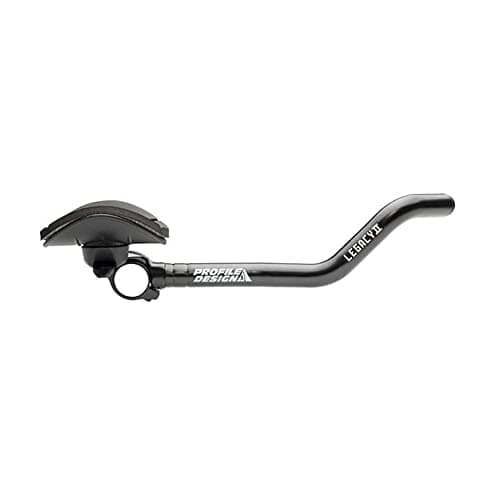
#4Profile Design Legacy II — Best budget clip-on from a real brand
Best for: First-time aero bar buyers testing whether they can hold the position before committing to anything expensive.
- Real brand hardware and replaceable pads at an entry-level price
- Adjustable armrests let you get roughly right rather than stuck with one position
- Aluminum build shrugs off over-torquing and repeated adjustment better than budget carbon
- Light enough and simple enough to leave on a training bike all season
- Nowhere near the adjustment range of the Redshift or Zipp options
- No flip-up or quick-release — group rides mean either unbolting or leaving them on
- Basic pads are thin; you'll notice on rides past two hours
- Stock fluctuates and the one-size clamp won't suit every bar
Not everyone can hold an aero position for 90 minutes on a road bike, and finding that out on cheap-but-decent bars is far better than finding it out on a set costing three times as much. The Legacy II gets you a real position with real adjustability and real spare parts, which is more than the $20 no-name bars offer. If you already know you love the aero position, skip straight to the Redshift or a Profile Design Sonic-family bar.
 #5
#5Controltech Sirocco Mini — Best short, light carbon clip-on
Best for: Road racers and short-course triathletes who want a minimal, low-profile bar for solo efforts and sprint-distance racing.
- Short mini-bar format is light, discreet and unobtrusive on a road cockpit
- Carbon construction keeps weight down for riders who care about total bike weight
- Compact extensions reduce steering interference and fit narrow modern road bars
- Clean looks — it doesn't turn your road bike into a visual mess
- Short extensions mean less forearm support and limited reach adjustment for taller riders
- Not the choice for 70.3 or Ironman distance — you'll want a longer, more supportive platform
- Carbon clamps demand a torque wrench and careful setup
- Premium price for fewer features than the aluminum options above
Mini clip-ons are a different tool: they're for adding a tuck to a road bike for solo time trials and sprint tris, not for building an all-day triathlon position. If your races are 20k bike legs and you want something light that doesn't dominate the cockpit, this is the tidy answer. If your goal race is long, buy a full-length bar with proper armrests and don't look back.
What to look for
- Extension shape — S-bend puts hands high with a relaxed wrist and is the friendliest starting point. J-bend is similar with a shorter rise. L-bend keeps the forearm and hand flatter for a lower, more aggressive look. Ski-tip/ski-bend extensions rise dramatically and suit riders who want to shrug forward with high hands. There is no fastest shape — the fastest one is the one you can hold for the whole bike leg.
- Armrest stack and reach adjustment — this is the spec that decides whether the bars fit you. Bars with spacer-based stack and slotted armrest tracks are worth the premium over fixed-armrest designs.
- Armrest width — narrow is usually faster, but only if your shoulders tolerate it. Make sure the bar lets you move the pads inboard and outboard.
- Removal method — flip-up armrests (Airstryke) keep the bars on the bike but out of the way; true quick-release (Redshift) takes the whole assembly off. Fixed bars mean an Allen key and a re-check of your position every time.
- Clamp compatibility — most modern road bars are 31.8mm at the clamp area. Check yours, and check that the clamp clears internally routed cables, integrated cockpits and your computer mount.
- Carbon vs. aluminum — for clip-ons, aluminum is usually the smarter buy. The weight difference is trivial, the adjustment tolerance is better, and you won't be nervous every time you torque a bolt.
- Budget for the rest of the conversion — a forward-relief tri saddle, possibly a shorter stem, and a fit session. Bars alone rarely finish the job.
Common questions
Will clip-on aero bars actually make me faster?
Yes, and by more than almost any other upgrade at this price. Shrinking your frontal area and getting your forearms out of the wind is worth a large chunk of your total drag. The caveat is that the gain evaporates if the position is so uncomfortable you sit up every ten minutes, or if it wrecks your run.
Do I need a bike fit, or can I do this myself?
You can do it yourself if you're patient: set armrests so your forearms are roughly level, elbows under or just behind your shoulders, and start high. Then ride it, film yourself from the side, and lower in small steps over weeks. That said, a fitter who does triathlon positions will get you there faster and will spot that your saddle needs to move forward, which is the change most DIY conversions miss.
Are aero bars allowed in my race?
In nearly all non-drafting triathlons, yes. In draft-legal racing, USA Cycling road races and most club group rides, no — which is exactly why quick-release or flip-up designs exist. Check your race rules and your club's policy before you show up with them bolted on.
Should I buy cheap carbon clip-ons instead?
We'd skip them. The listings rarely publish stack, reach or torque specs, adjustability is typically minimal, and you have no path to replacement pads or hardware. If budget is the constraint, an entry aluminum bar from a known brand is the better buy.
Bottom line
One bike that does group rides and triathlons: REDSHIFT Quick-Release Clip-On Aerobars S-Bend. Lots of group riding but you don't want to unbolt anything: Profile Design Airstryke V2. Working with a fitter and expecting to iterate: Zipp Vuka Clip with Evo 70 Extensions. Testing the waters on a budget: Profile Design Legacy II. Light, minimal bars for sprint-distance and solo time trials: Controltech Sirocco Mini.
Also worth a look if you can find them elsewhere: Profile Design's Sonic Ergo family for a full-featured aluminum clip-on with excellent armrest adjustment, and Profile Design bracket riser kits if you need more armrest stack than your bars provide out of the box. Once the position is sorted, the next real gains are a aero helmet and getting your pacing right with a decent bike computer.
Written by
FullKitTri Editors
The FullKitTri editorial team reviews triathlon gear across every discipline and budget. Our recommendations are based on hands-on racing experience, independent research, and hundreds of hours comparing products.
- Combined 50+ triathlons completed
- Sprint through Ironman distance experience
More in Triathlon Bikes
Best Indoor Bike Trainers for Triathletes in 2026
Direct-drive vs wheel-on, power accuracy, noise, and Zwift compatibility - six indoor bike trainers ranked for triathletes who train in aero.
Read guideHow to Choose a Triathlon Bike: Road vs. Tri vs. TT Explained
Road bike vs. triathlon bike vs. TT bike — geometry, aero, comfort, and budget compared. How to pick the right bike for your first sprint, your first 70.3, or your Ironman build.
Read guideBest Aero Helmets for Triathlon in 2026
The aero helmets worth the watts: short-tail vs. long-tail, ventilation trade-offs, and which models actually save time at age-group speeds.
Read guideBest Bike Computers for Triathlon in 2026
The best GPS bike computers for triathlon training and racing — from budget to premium, compared on battery life, navigation, power-meter support, and readability.
Read guide#1 pick
REDSHIFT Quick-Release Clip-On Aerobars S-Bend — Best overall for a dual-purpose road bike