Best Road Bike Helmets for Triathlon (Non-Aero) in 2026
Road helmets beat aero lids on hot, hilly, and sprint-distance courses. Five vented picks for triathletes, with honest trade-offs on fit, weight, and cooling.
FullKitTri is reader-supported. We may earn a commission from qualifying purchases made through links on this page.
Aero helmets are faster in a wind tunnel. They are not always faster on your race course, and they are almost never more comfortable. A long-tail or stubby aero lid buys you watts at sustained speed on flat roads — but it also traps heat, and heat is the single biggest predictor of a blown-up run split in hot-weather racing.
There are three situations where a well-vented road helmet is the smarter choice. Hot courses: if you are racing in 85°F+ with high humidity, core temperature management beats a handful of watts. Hilly courses: every time you drop under about 20 mph on a climb, the aero advantage shrinks toward nothing while the ventilation penalty stays constant. Sprint and Olympic races on a road bike: if you are not in an aggressive aero position anyway, a $300 helmet with a tail that sticks straight up into the wind when you look down is just an expensive hat.
A road helmet is also the one you will actually wear for 90% of your training miles, your group rides, and your commute. If you are buying one helmet, buy this one. If you already have a good road lid and want to go faster on a flat, cool-weather 70.3, see our aero helmets guide instead.
How we picked
- Ventilation first. Big front intakes, internal channeling, and real exhaust ports. A helmet with vents that don't connect to anything is decoration.
- Rotational impact protection. MIPS or an equivalent documented system (Kask's WG11, Koroyd-backed constructions). We skipped anything that only claims basic CPSC compliance at a premium price.
- Fit system quality. A one-handed micro-dial you can adjust mid-ride, plus vertical cradle adjustment so the helmet sits level with your head rotated up in the aero bars.
- Established brands only. Giro, Smith, Kask. Generic listings with rotating names and detachable magnetic goggles are not worth the risk on the one piece of gear protecting your skull.
- Triathlon-specific details. Sunglasses storage, strap comfort over a tri suit collar, and whether the helmet still works when you're looking up from the aero bars.
Quick picks
| Product | Best for | Price | |
|---|---|---|---|
| Giro Agilis MIPS — Best all-around road helmet for triathletes | The triathlete who wants one helmet that handles hot races, hilly courses, and every training ride without thinking about it. | $119.95 | View |
| SMITH Persist MIPS — Best protection-per-dollar | Riders who prioritize impact protection and want Koroyd coverage plus MIPS without spending flagship money. | $145.00 | View |
| Giro Syntax MIPS — Best semi-aero compromise | Racers on rolling or mixed courses who want some aero benefit without cooking their head. | $85.99 | View |
| Kask Utopia Y — Best road helmet when you want aero without a TT lid | Flat-course racers on road bikes who want near-aero speed but refuse to wear a tail. | $300.00 | View |
| Giro Isode MIPS II — Best budget pick for your first race | First-time triathletes who need a safe, legal, decently vented helmet and would rather spend the money on a wetsuit. | $79.95 | View |
The picks, in detail
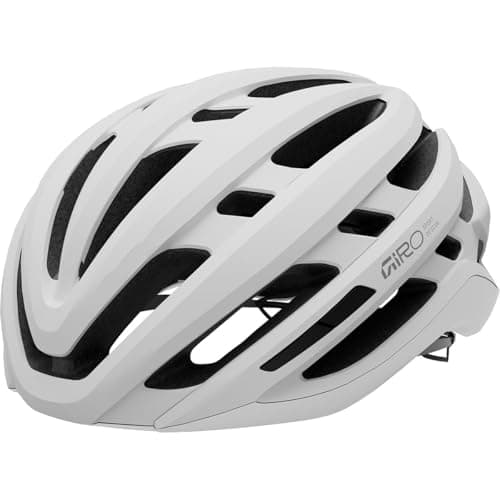 #1
#1Giro Agilis MIPS — Best all-around road helmet for triathletes
Best for: The triathlete who wants one helmet that handles hot races, hilly courses, and every training ride without thinking about it.
- Heavily vented with deep internal channeling — genuinely cool on long, slow climbs
- MIPS rotational protection at a mid-tier price point
- Roc Loc 5 Air fit system adjusts one-handed and has vertical cradle positioning
- Light enough that you stop noticing it, which matters on a 70.3 bike leg
- Giro's sizing and replacement pads are easy to find
- Not aerodynamically optimized — you give up watts versus a semi-aero or TT lid on flat courses
- Medium-only listing here; check your head circumference before ordering
- Straps are functional but not the plushest in this price range
The Agilis is the helmet most age-groupers should own. It sits at the intersection of ventilation, weight, and price where you stop paying for diminishing returns, and the MIPS liner plus Roc Loc 5 Air fit system are the same core tech Giro puts in helmets costing twice as much. On a hot Olympic-distance course it will keep your head cooler than almost anything with an aero profile.
The honest trade-off: it is a vented road helmet, full stop. If your A-race is a flat, cool 70.3 where you'll hold 23 mph in the bars for three hours, a proper aero lid is the faster call. For everything else — training, hilly racing, sprint racing, hot racing — the Agilis is the default answer.
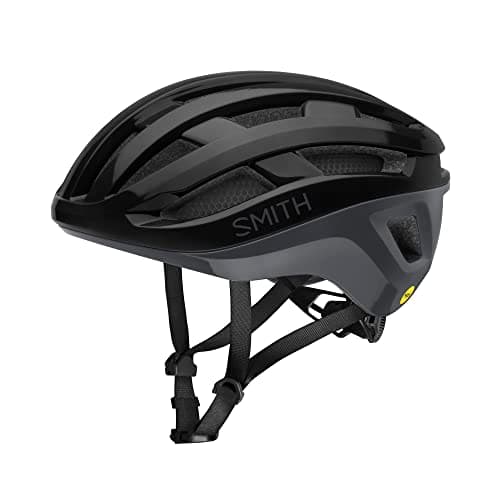 #2
#2SMITH Persist MIPS — Best protection-per-dollar
Best for: Riders who prioritize impact protection and want Koroyd coverage plus MIPS without spending flagship money.
- Koroyd structure plus MIPS — two complementary protection systems in one shell
- Koroyd tubes are designed to channel air through the helmet rather than block it
- VaporFit dial adjustment is easy to tune with gloves or wet hands
- Smith's fit shape suits slightly rounder heads that find Giro too oval
- Sunglasses integration works well with most frames
- Heavier than comparable vented road helmets — you'll notice it on a long ride
- Koroyd sections reduce the sheer open-vent area versus a pure airflow design
- Noticeably less aero than a semi-aero road lid
- Replacement pads and parts are less widely stocked than Giro's
If your buying criteria start with crash protection rather than grams or watts, the Persist is the strongest value here. Koroyd's crushable tube structure is doing real work on linear impacts while MIPS handles rotational forces, and Smith channels air through the Koroyd rather than simply plugging the vents with it.
It is not the coolest-running or lightest helmet on this list, and for a hot Ironman-distance bike leg I'd take the Agilis. But for triathletes who also ride in traffic, do group rides, or just want more margin, the Persist earns its place.
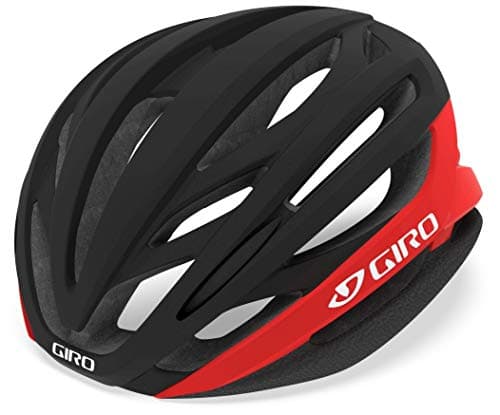 #3
#3Giro Syntax MIPS — Best semi-aero compromise
Best for: Racers on rolling or mixed courses who want some aero benefit without cooking their head.
- Semi-aero shell shape is measurably slipperier than a fully open road helmet
- Still vents well enough for warm-weather racing — the compromise actually works
- Integrated eyewear docking ports hold sunglasses securely in transition
- MIPS plus Roc Loc 5 Air fit system
- Often the best price-to-performance ratio in Giro's road range
- Compromise helmet: slower than a real aero lid, warmer than the Agilis
- Heavier than Giro's lightest climbing helmets
- Stock on specific size and color combinations is inconsistent
The Syntax is the helmet to buy if you keep going back and forth between "should I get an aero helmet?" and "will I overheat?" The rounded, closed-back shell picks up some of the aero benefit while the front intakes and internal channels keep enough air moving for a 70.3 in reasonable conditions.
The eyewear docking is a genuinely useful triathlon feature — you can stash glasses on the helmet during a dusty or rainy segment instead of fumbling at an aid station. Pair it with something that stays put on the run; see our triathlon sunglasses guide.
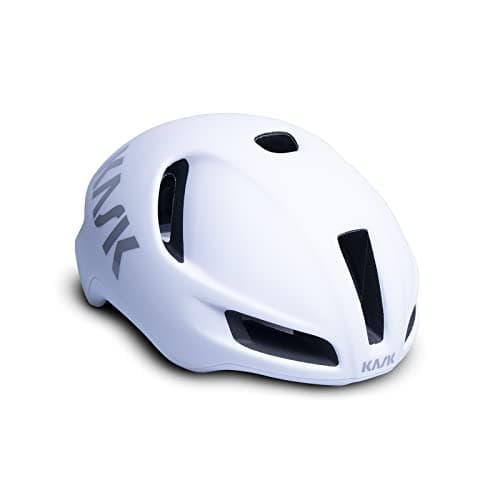 #4
#4Kask Utopia Y — Best road helmet when you want aero without a TT lid
Best for: Flat-course racers on road bikes who want near-aero speed but refuse to wear a tail.
- Among the fastest road-shaped helmets available — designed around sustained-speed riding
- Octo Fit cradle holds position well even with your head rotated up in the aero bars
- Finishing quality, strap comfort, and padding are a clear step above mid-tier helmets
- Still has functional front intakes and exhausts, unlike a true TT helmet
- Works as a normal road helmet for daily training, which a TT lid does not
- Flagship pricing — roughly triple what the Agilis costs
- Kask does not use MIPS; it relies on its own WG11 rotational testing protocol, which some buyers will want to research first
- Clearly warmer than the Agilis or a true climbing helmet on hot days
- Limited stock and sizing availability
The Utopia Y is Kask's answer to "I want aero gains but I'm riding a road bike with clip-ons and I don't want to look like a time-trial specialist." On a flat sprint or Olympic course where you're spending 40 to 70 minutes at speed, it's the fastest thing in this roundup without crossing into dedicated TT territory.
Buy it only if you race flat and cool and you have the budget. On a hilly 70.3 in August, a cheaper vented helmet will serve you better — and if you're committing this much money to head aero anyway, compare it honestly against a real aero helmet.
 #5
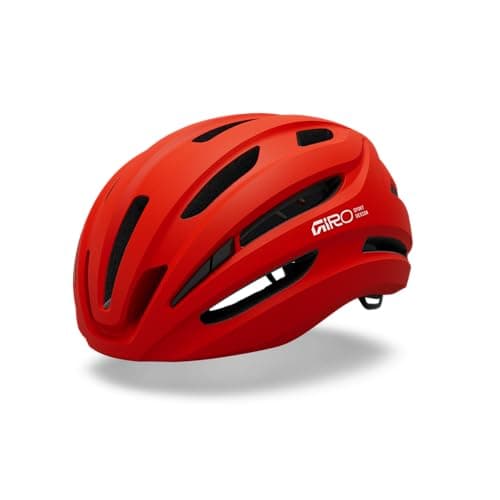
#5Giro Isode MIPS II — Best budget pick for your first race
Best for: First-time triathletes who need a safe, legal, decently vented helmet and would rather spend the money on a wetsuit.
- MIPS rotational protection at a true entry-level price
- Universal adult fit with a Roc Loc dial — easy to get a workable fit without trying on five sizes
- Established brand with real safety engineering behind it, unlike generic listings at the same price
- Light and vented enough for sprint-distance racing
- Perfectly race-legal at any USAT or Ironman event
- In-mold construction and basic venting — it runs warmer than the Agilis on long, hot rides
- Universal sizing means the fit is adequate rather than dialed
- Padding is thin and compresses over a season of sweaty rides
- No aero shaping at all
Helmet budget is the wrong place to go full generic, but it's also the wrong place to blow your gear budget before your first race. The Isode MIPS II gets you a real brand, a real fit system, and real rotational-impact protection for less than most no-name helmets with magnetic goggles glued on.
It will feel warmer and less refined than the Agilis — that's the deal. Race your first season in it, learn what you actually care about, and upgrade when you know. Put the savings toward the rest of the beginner gear checklist.
What to look for
- Real ventilation, not vent-shaped holes. Look for large front intakes connected to internal channels and open rear exhausts. If you can't see light through the helmet front-to-back, air isn't moving through it either.
- Rotational impact protection. MIPS is the most common and easiest to verify. Kask's WG11 protocol and Koroyd-based constructions are legitimate alternatives, but "CPSC certified" alone is only a minimum legal floor, not a feature.
- Vertical cradle adjustment. This is the triathlon-specific detail nobody mentions. In the aero bars your head rotates up, and a helmet that sits too low will push the back of the shell into your neck and tilt the front into your line of sight. A fit system with vertical positioning fixes this.
- Weight you'll feel at hour three. The difference between a light and a heavy helmet is small in grams and surprisingly large in neck fatigue on a 70.3 or Ironman bike leg.
- Strap comfort over a tri suit. Wet straps, bare neck, and a zipper collar is an irritation combination you'll feel by mile 40. Softer, thinner strap webbing matters more in triathlon than in road cycling.
- Replace after any crash. EPS foam is single-use. Even a parking-lot drop that leaves a visible dent means the helmet is done.
Common questions
Is an aero helmet actually faster than a road helmet?
Yes, at sustained speed on flat terrain, in a stable aero position. The catch is all three conditions. If you're climbing, sitting up frequently, or holding a head position that exposes the tail to the wind, the measured advantage shrinks dramatically. For flat 70.3 and Ironman racing where you'll hold position for hours, the aero lid wins. For sprint and hilly racing on a road bike, a vented helmet is often the better overall result once you account for heat.
Can I race triathlon in a regular road helmet?
Absolutely. Every road helmet here is race-legal at USAT, Ironman, and Challenge events. The helmet rules that matter are: it must be CPSC (or equivalent) certified, undamaged, and buckled before you touch your bike in transition. Nobody is checking whether it's aero.
Does MIPS actually do anything?
The research on rotational acceleration and brain injury is solid, and MIPS-equipped helmets generally score better on independent ratings than their non-MIPS equivalents. It adds a small amount of weight and cost. At this point most helmets worth buying include it or an equivalent system, so the practical question is rarely whether to get it — it's which fit system and ventilation package you want it wrapped in.
How often should I replace my helmet?
Immediately after any impact. Otherwise, every three to five years of regular use — UV exposure, sweat, and heat cycles degrade EPS foam and the shell bond over time. If your helmet is older than your last two bikes, replace it.
Bottom line
Buy one helmet and be done: the Giro Agilis MIPS. It's the best balance of cooling, weight, protection, and price for a triathlete who races in heat and trains year-round.
Protection is your top priority: the SMITH Persist MIPS. Koroyd plus MIPS for mid-tier money, at the cost of some weight.
Rolling or mixed courses, want a bit of free speed: the Giro Syntax MIPS. The semi-aero compromise genuinely works, and the eyewear docking is a real transition convenience.
Flat, cool race course and a flexible budget: the Kask Utopia Y — but compare it honestly against a dedicated aero lid before you commit.
First race, tight budget: the Giro Isode MIPS II. Safe, legal, vented enough, and from a brand that actually tests its products.
Also worth a look if you can find them: the Specialized Propero 4, POC Ventral Air MIPS, and Lazer Z1 KinetiCore are all excellent vented road helmets that weren't available in our pool this round.
Written by
FullKitTri Editors
The FullKitTri editorial team reviews triathlon gear across every discipline and budget. Our recommendations are based on hands-on racing experience, independent research, and hundreds of hours comparing products.
- Combined 50+ triathlons completed
- Sprint through Ironman distance experience
More in Triathlon Bikes
Best Indoor Bike Trainers for Triathletes in 2026
Direct-drive vs wheel-on, power accuracy, noise, and Zwift compatibility - six indoor bike trainers ranked for triathletes who train in aero.
Read guideBest Clip-On Aero Bars for Turning a Road Bike Into a Triathlon Bike
Clip-on aero bars that actually fit a road bike: Redshift, Profile Design, Zipp and Controltech compared on shape, adjustability and fit-friendliness.
Read guideHow to Choose a Triathlon Bike: Road vs. Tri vs. TT Explained
Road bike vs. triathlon bike vs. TT bike — geometry, aero, comfort, and budget compared. How to pick the right bike for your first sprint, your first 70.3, or your Ironman build.
Read guideBest Aero Helmets for Triathlon in 2026
The aero helmets worth the watts: short-tail vs. long-tail, ventilation trade-offs, and which models actually save time at age-group speeds.
Read guide#1 pick
Giro Agilis MIPS — Best all-around road helmet for triathletes